


For Sale by Owner Questions & Answers
Sell your own home and save it's easy...
Across the Picket Fence - Is a forum where sellers and buyers ask questions of real estate experts (appraisers, attorneys, inspectors, and lenders) and Picket Fence compiles and publishes these responses. Chances are your specific question(s) have been asked by a previous homeseller sometime in the past. There are hundreds of questions on dozens of topics contained in Across the Picket Fence. NOTE: Laws change, so be sure to ask your attorney what the law is now as it pertains to your situation.

Click on Topic of Interest (below) to Get Your Question Answered
Topics: Pricing | Contracts | Disclosure | Offers | Financing | Buyers | Agents | Buyer Issues | MLS Listings, Lock box security
Latest Questions
March 2021
Q: We just listed
our house with you guys, and added the MLS option too. We've had an
amazing response, and have been showing it constantly for the last three
days..over 20 showings so far! As you recommended, we gave everyone a
deadline for making an offer (tomorrow). But this afternoon I received a
strange call from one of the buyer's agents... she basically asked for
an update of the status of our offers. What, if anything, should I tell
her? We already have 12 parties making offers!!
A: First, that's great that you're having so much interest on your
beautiful home! As you know, when you are listed on MLS your property
information goes out to all the agencies, and is also available to the
public on PicketFencePreview.com and Realtor.com. As such, it's no
surprise you are hearing from a lot of agents with buyers in tow eager
to see and want to buy your home. You were smart to set up multiple
showings over a short timeline, then set a deadline for offers!
Note: Professionally, buyer agents are accustomed to speaking with the seller's agent about offer statuses. The only information typically disclosed is whether or not offers have been received or if any offers are expected to come in. You may be able to ascertain whether the offers were for asking price or above, but typically an agent will only disclose if there are any offers and if there is a deadline for submitting an offer. It is the seller agent's responsibility to present any and all offers to the seller for their consideration.
General Issues
We are selling our home in Vermont but we now live out of state. What do we need to be aware of as out of state sellers?
Answer: If you cannot be present to attend the closing, you can appoint your attorney to represent you by power of attorney. You may need to pay real estate withholding tax to the State of Vermont if you are a resident of another state at the time of your closing. Depending on when and how long you occupied your Vermont property, you may have to pay federal capital gains taxes as well. Consult an experienced accountant.
Seller: Homes in my neighborhood have been decreasing in value due to a couple of duress sales (although my home isn't typical of the others that have sold). I'm wondering if I should wait a year or so until the market has improved. ...
Have you had a professional appraisal done? The appraiser will likely use one of the recent sales in the neighborhood as a comp, but if your home truly is different, chances are the appraiser is going to look outside your immediate neighborhood for the other comps. You might be pleasantly surprised with the true value of your home! Before making such a big decision, it would seem worthwhile to take a little time to further investigate your home's value, and think about why you're selling in the first place. Is it strictly a financial move? If so, no one has a crystal ball. Right now homes are holding their value well, overall, in Vermont, due to healthy economic forces and outside market demand for Vermont property.
I'm selling my condominium. What information should I have available to share with prospective buyers?
Answer: Obtain copies of the condominium declaration, bylaws and any other association rules or regulations. Request a condominium resale certificate from the property management company. You must get a fire safety certificate from the state fire marshal, or local fire chief if you live in a large city or town. This entails an inspection; you might need to remedy any violations before a final certificate can be issued. Ask the town zoning office to provide you with a certificate of occupancy or statement of no zoning violations; this varies by name depending on the town. Have a copy of your deed available as well.
Seller: How is square footage calculated? Is it just the measurement of the floor space? Also, I know a basement is considered below-grade, and its square footage is considered different from above-grade. But what about a walk-out basement? Is it also considered "below-grade"?
Appraiser: Yes. If any portion of it is below-grade, the square footage is considered below-grade. Appraisers measure the exterior dimensions of the house and multiply the length by the width. Even if floor space is missing upstairs, as in a two-story foyer popular nowadays, we don't subtract square footage on the second floor. Also, in homes with sloping roof lines, like some capes, we measure 3-4 feet out from the wall on the second level, this is about where furniture can start to be placed, and derive the square footage minus the floor space in that 3-4 foot region close to the sloping ceiling.
Seller: Do I need Errors and Omissions Insurance? I was told by a real
estate agent that it would be a good idea to get this if I'm selling my
own property.
We checked with a local
insurance agencies , who checked with their insurance company providers.
Errors and Omissions insurance is not available for a private
individual; it is meant for professionals who represent others. The
agent is incorrect.
Seller/Buyer: Do people
usually sell their place first, or find a place to buy first? We're
nervous that we might sell right away, and then be stuck without a place
to live!
Generally, most people seem to do
both simultaneously - try to sell while also searching for the next
home. Ideally, you want to be under contract, at the time you make an
offer on another property, since this will make your offer more
attractive to the seller. Most sellers will be reluctant to take their
house off the market while waiting for yours to sell. If they do agree
to, they most likely will limit the term of the contract to 30-60 days,
which doesn't give you much time to sell!
As for being stuck without a home, don't worry. If your house goes under contract first, you can specify in the contract that the agreement is contingent upon your finding suitable housing. The time period allowed for you to find housing is something you will negotiate with your buyer. If you can't find a house to buy for yourself by the deadline, you and your buyer can then extend the deadline or cancel the contract altogether.
Seller: A local real estate publication recently reported that only 8% of all FSBO efforts are successful, according to national statistics. Is this true?
No. Even the National Association
of Realtors admits that around 20% of the nation's real estate sales are
FSBO (see Smart Money, July 2012), and
the government puts the figure at about 30%. The latter is based upon a
study conducted through the U.S. Dept. of Commerce, Statistics division,
which looked at the percentage of real estate sales which had a
commission included (as reported to HUD).
Q: I am
considering buying a home. As a buyer I don't see what difference it
makes using a broker -- it doesn't cost me anything. The seller pays for
the commission. So why not use a broker? -- Brian K., So. Burlington
A: The main advantage of purchasing a home directly from the seller is
that it usually saves money for both you and the seller. The Private
Sale homeowner is in a better position to offer a more competitive price
because he doesn't have a commission to pay. Look at it from the
seller's perspective: say he wants to net $100,000 for his property. He
will ask or accept $106,000 for the house if he has to pay a 6%
commission on the sale, or $103,000 if he's picking up the 3% commission
for a buyer's broker. However, if no commission is involved, he will
ask or accept $100,000! The buyer benefits because he was able to get
the house for less.
Your objective, though, is to find
the house that is right for you. If you can't find what you're looking
for through a private sale, you should certainly seek the services of a
real estate agent or buyer broker. There are exclusive buyer brokers who
ONLY represent buyers, and have taken specific courses for this. These are your
best bet, since you can be assured they will not try to steer you toward
their agency's listings.
The house we're selling needs a new roof. We want to sell as is. Can we specify this in our contract agreement (i.e. not subject to inspection)?
While you can try to sell "as-is" and not allow the buyers to have an
inspection, this may put off a lot of buyers. A better way to do it is
to "except" the roof in your purchase and sale contract. Allow the buyer
to have an inspection, but specify that the price already takes into
account the condition of the roof, and that it will not be subject to
renegotiation or a concession on the price.
Seller: I'm planning to
build in the spring and want to sell my property first. I wonder,
though, if I'm wasting my time trying to sell it before spring, since
I've heard the market slows down in the winter...
Why wait until spring when there will be more houses on the market and
you'll have more competition? With mortgage interest rates at an
all-time low, people are motivated to keep looking until they find the
home they want.
Seller: I have a good-sized lot adjacent to my house that can be sold separately. I’d like to sell the whole thing together (64 acres), but I also want to let people know I have land for sale incase the house doesn’t sell. From your experience, what seems to work the best — selling separately, or as a complete package?
Many Picket Fence advertisers have tried selling the entire property as a single package first, with limited success. The extra land always pushes the homestead into a significantly higher price bracket — which makes it tough to compete with similar 5 or 10 acre homesteads that don’t have all that extra land attached.
Ironically, what seems to work best is to market just the homestead property initially, and mention that additional land is available in the ad. This enables you to market to a larger potential buyer pool. Nine times out of ten, your prospective buyer will value the extra land, and decide to purchase it too.
Topics: Pricing | Contracts | Disclosure | Offers | Financing | Buyers | Agents | Buyer Issues | MLS Listings, Lock box security
Picket Fence Instructional video, book
Trusted How-to Information from Picket Fence Preview.
Based on 28 years of helping people sell their own homes.
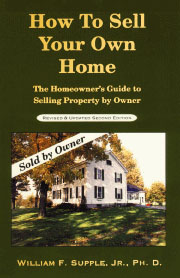
Want to sell on your own through Picket Fence but aren't sure of the process? Learn in the way that's best for you from our 48-pg How to Sell Your Own Home book!
|
How to Sell Your Own Home book Step-by-Step Instructional Book 48-pages Get comfortable and confident by reading a great Included with all Picket Fence ads, accessible |
 |
